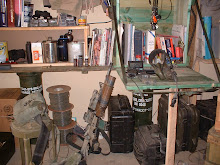
My good buddy Mark the Feral Ferret - Charter Member of Team STORMBRINGER - sent in THIS:
Subject: Seal team 6
Hey STORMBRINGER
Want to see what Seal Team Six looks like in their business suits?
I wish we could have seen the expression on UBL's face when he saw these guys coming through the door!
I busted him out because these guys are clearly displaying SEAL Team EIGHT insignia. - S.L.
Anybody else spot any discrepancies?
STORMBRINGER SENDS
Today's Bird HERE
.
Thursday, May 19, 2011
Wednesday, May 18, 2011
STOP THE PRESSES
Hokay I figured a cool way to check the history ( Ctrl+H ) found the link to the New York Times article referenced in yesterday's post A MODERN MERCENARY ARMY.
Anyway if you'd clicked on the bold sub-headline it takes you right to the NYT article - D'oH!
If I had time right now I'd go on about the challenges Erik Prince faces in standing up indiginous armies, based on my twenty+ years of experience in this field - subject matter for a future post - all I'll say right now is the hardest thing I know how to do is to manage human beings; everything and anything under the sun will happen right before your eyes and you can take nothing for granted. Erik Prince wants to turn eight hundred Third Worlders into a sort of CAG-for-hire? To that I say good luck in finding eight hundred even if you recruited solely from the modern, industrialized FIRST World - it ain't the same as fielding a security force full of ex-Marine Corps Lance Corporals who actually know the basics of soldiering.
Having said all that, STORMBRINGER wishes the best to Erik Prince and his team in this endeavor.
SEAN LINNANE SENDS
.
Anyway if you'd clicked on the bold sub-headline it takes you right to the NYT article - D'oH!
If I had time right now I'd go on about the challenges Erik Prince faces in standing up indiginous armies, based on my twenty+ years of experience in this field - subject matter for a future post - all I'll say right now is the hardest thing I know how to do is to manage human beings; everything and anything under the sun will happen right before your eyes and you can take nothing for granted. Erik Prince wants to turn eight hundred Third Worlders into a sort of CAG-for-hire? To that I say good luck in finding eight hundred even if you recruited solely from the modern, industrialized FIRST World - it ain't the same as fielding a security force full of ex-Marine Corps Lance Corporals who actually know the basics of soldiering.
Having said all that, STORMBRINGER wishes the best to Erik Prince and his team in this endeavor.
SEAN LINNANE SENDS
.
7 ITEM CHECKLIST
Here's a set of values you can use as a yardstick when going through the recruiting and selection process for your team; these values work the same whether in business or the security profession (which is, of course, a business):
Dependability
Character
Loyalty
Work Ethic
Finances
Personal Issues
Trust
Here's a useful mnenomic to remember this checklist:
“Don’t Consider Letting Worthless Flaky People Try out”
* * *
When I first got out of the service and started out in security-related business, I became very interested in the application of military leadership principles business applications. It occurred to me that business leadership training exists for the very upper levels of management - they have their MBAs, etcetera - but there is little or no training available for the first-line supervisors and mid-level managers. I wrote a few articles on the subject for trade magazines, and even gave a couple of seminar presentations.
Three years on I am disappointed to report that what I have encountered more often than not is that 'management' is actually 'leadership by committee' - in place of true leadership itself. This is the end result of a business climate where pro-active decision-making is often viewed as incurring risk, and risk-taking is discouraged.
A good article I found that explores the theme of Leader vs. Manager vs. Executive is found in Organizational Behavior & Leadership - an Ezine that covers Business Strategy, Leadership, Organizational Behavior & Organizational Development.
I consulted a family friend; Matt had a long and honorable career as a policeman in Calcutta, an officer with the Gurkhas in World War II, and as a mechanical engineer working on power plants in Bangladesh and Thailand. His advice: "When you first take charge of a new outfit, there will be one guy there who doesn't fit in, who you will have nothing but trouble with. My advice is to find out who that guy is, and get rid of him as soon as possible."
The Leader always sets the trail for others to follow.
CONTRAST AND COMPARE DEPARTMENT
Loyal Reader and Charter Member of Team STORMBRINGER (who wishes to remain un-named) brings this gem to our attention - re-posted from Ace of Spades HQ:
DECIDEDLY DIFFERENT WAYS TO USE "I" IN A SPEECH
President Bush's Speech Upon the Capture of Saddam Hussein
Commenter "Crusty" had a good idea. He went back and looked at George W. Bush's speech after the capture of Saddam Hussein in order to compare it with Obama's self-aggrandizing "I was practically there, man" speech last Sunday. You know, the one where he used the word "I" like a carpenter uses ten penny nails.
Victor Davis Hanson - whom we also follow here at Team STORMBRINGER.
pulled all the first person references:
Obama's speech:
“Tonight, I can report . . . And so shortly after taking office, I directed Leon Panetta . . . I was briefed on a possible lead to bin Laden . . . I met repeatedly with my national security team . . . I determined that we had enough intelligence to take action. . . . Today, at my direction . . . I’ve made clear . . . Over the years, I’ve repeatedly made clear . . . Tonight, I called President Zardari . . . and my team has also spoken. . .These efforts weigh on me every time I, as Commander-in-Chief . . . Finally, let me say to the families . . . . I know that it has, at times, frayed. . . ..”
Compare that with the speech given by George W. Bush on December 14, 2003:
Good afternoon. Yesterday, December the 13th, at around 8:30 p.m. Baghdad time, United States military forces captured Saddam Hussein alive. He was found near a farmhouse outside the city of Tikrit, in a swift raid conducted without casualties. And now the former dictator of Iraq will face the justice he denied to millions.
The capture of this man was crucial to the rise of a free Iraq. It marks the end of the road for him, and for all who bullied and killed in his name. For the Baathist holdouts largely responsible for the current violence, there will be no return to the corrupt power and privilege they once held. For the vast majority of Iraqi citizens who wish to live as free men and women, this event brings further assurance that the torture chambers and the secret police are gone forever.
And this afternoon, I have a message for the Iraqi people: You will not have to fear the rule of Saddam Hussein ever again. All Iraqis who take the side of freedom have taken the winning side. The goals of our coalition are the same as your goals -- sovereignty for your country, dignity for your great culture, and for every Iraqi citizen, the opportunity for a better life.
In the history of Iraq, a dark and painful era is over. A hopeful day has arrived. All Iraqis can now come together and reject violence and build a new Iraq.
The success of yesterday's mission is a tribute to our men and women now serving in Iraq. The operation was based on the superb work of intelligence analysts who found the dictator's footprints in a vast country. The operation was carried out with skill and precision by a brave fighting force. Our servicemen and women and our coalition allies have faced many dangers in the hunt for members of the fallen regime, and in their effort to bring hope and freedom to the Iraqi people. Their work continues, and so do the risks. Today, on behalf of the nation, I thank the members of our Armed Forces and I congratulate 'em.
I also have a message for all Americans: The capture of Saddam Hussein does not mean the end of violence in Iraq. We still face terrorists who would rather go on killing the innocent than accept the rise of liberty in the heart of the Middle East. Such men are a direct threat to the American people, and they will be defeated.
We've come to this moment through patience and resolve and focused action. And that is our strategy moving forward. The war on terror is a different kind of war, waged capture by capture, cell by cell, and victory by victory. Our security is assured by our perseverance and by our sure belief in the success of liberty. And the United States of America will not relent until this war is won.
May God bless the people of Iraq, and may God bless America.
Thank you.
ADMIN NOTE: Yesterday's Post A MODERN MERCENARY ARMY included a link to the New York Times article - 5 pages long - which included much more detail regarding the challenges Erik Prince has encountered in standing up a small army with Special Operations capabilities. A reader pointed out that I failed to include the link; then I was working all afternoon and all night and now I'm having the Devil of a time finding the original NYT article. I will continue working toward providing this information. - S.L.
Today's Bird HERE
.
Tuesday, May 17, 2011
A MODERN MERCENARY ARMY
Secret Desert Force Set Up by Blackwater’s Founder
This story is amazing . . . S.L.
ABU DHABI, United Arab Emirates — A plane carrying dozens of Colombian men touches down in this glittering seaside capital; whisked through customs by an Emirati intelligence officer, the group boards an unmarked bus and drives roughly 20 miles to a windswept military complex in the desert sand.
Entering the United Arab Emirates posing as construction workers, the Colombians are in fact soldiers for a secret American-led mercenary army assembled by Erik Prince, the billionaire founder of Blackwater Worldwide, with $529 million from the oil-soaked sheikdom.
According to former employees on the project, American officials and corporate documents obtained by The New York Times, Prince resettled here last year after facing mounting legal problems in the United States. He's been hired by the Crown Prince of Abu Dhabi to put together an 800-member battalion of foreign troops for the U.A.E.
“The gulf countries, and the U.A.E. in particular, don’t have a lot of military experience. It would make sense if they looked outside their borders for help,” said one Obama administration official who knew of the operation. “They might want to show that they are not to be messed with.”
A satellite image of the camp in the United Arab Emirates built to train an 800-member military unit.
Still, it is not clear whether the project has the United States’ official blessing. Legal experts and government officials said some of those involved with the battalion might be breaking federal laws that prohibit American citizens from training foreign troops if they did not secure a license from the State Department.
Mark C. Toner, a spokesman for the department, would not confirm whether Mr. Prince’s company had obtained such a license, but he said the department was investigating to see if the training effort was in violation of American laws. Mr. Toner pointed out that Blackwater (which renamed itself Xe Services ) paid $42 million in fines last year for training foreign troops in Jordan and other countries over the years.
To help fulfill his ambitions, Mr. Prince’s new company, Reflex Responses, obtained another multimillion-dollar contract to protect a string of planned nuclear power plants and to provide cybersecurity. He hopes to earn billions more, the former employees said, by assembling additional battalions of Latin American troops for the Emiratis and opening a giant complex where his company can train troops for other governments.
Prince has masked his involvement with the mercenary battalion. His name is not included on contracts and most other corporate documents; company insiders refer to him by the code name “Kingfish.” Three former employees, speaking on the condition of anonymity because of confidentiality agreements, and two people involved in security contracting said that in recruiting the Colombians and others from halfway around the world, Mr. Prince’s subordinates follow his strict rule: hire no Muslims.
Muslim soldiers, Mr. Prince warned, could not be counted on to kill fellow Muslims . . .
Read the rest of it HERE
Today's Bird HERE
.
This story is amazing . . . S.L.
Erik Prince has a new project.
ABU DHABI, United Arab Emirates — A plane carrying dozens of Colombian men touches down in this glittering seaside capital; whisked through customs by an Emirati intelligence officer, the group boards an unmarked bus and drives roughly 20 miles to a windswept military complex in the desert sand.
Entering the United Arab Emirates posing as construction workers, the Colombians are in fact soldiers for a secret American-led mercenary army assembled by Erik Prince, the billionaire founder of Blackwater Worldwide, with $529 million from the oil-soaked sheikdom.
According to former employees on the project, American officials and corporate documents obtained by The New York Times, Prince resettled here last year after facing mounting legal problems in the United States. He's been hired by the Crown Prince of Abu Dhabi to put together an 800-member battalion of foreign troops for the U.A.E.
“The gulf countries, and the U.A.E. in particular, don’t have a lot of military experience. It would make sense if they looked outside their borders for help,” said one Obama administration official who knew of the operation. “They might want to show that they are not to be messed with.”
A satellite image of the camp in the United Arab Emirates built to train an 800-member military unit.
Still, it is not clear whether the project has the United States’ official blessing. Legal experts and government officials said some of those involved with the battalion might be breaking federal laws that prohibit American citizens from training foreign troops if they did not secure a license from the State Department.
Mark C. Toner, a spokesman for the department, would not confirm whether Mr. Prince’s company had obtained such a license, but he said the department was investigating to see if the training effort was in violation of American laws. Mr. Toner pointed out that Blackwater (which renamed itself Xe Services ) paid $42 million in fines last year for training foreign troops in Jordan and other countries over the years.
To help fulfill his ambitions, Mr. Prince’s new company, Reflex Responses, obtained another multimillion-dollar contract to protect a string of planned nuclear power plants and to provide cybersecurity. He hopes to earn billions more, the former employees said, by assembling additional battalions of Latin American troops for the Emiratis and opening a giant complex where his company can train troops for other governments.
Prince has masked his involvement with the mercenary battalion. His name is not included on contracts and most other corporate documents; company insiders refer to him by the code name “Kingfish.” Three former employees, speaking on the condition of anonymity because of confidentiality agreements, and two people involved in security contracting said that in recruiting the Colombians and others from halfway around the world, Mr. Prince’s subordinates follow his strict rule: hire no Muslims.
Muslim soldiers, Mr. Prince warned, could not be counted on to kill fellow Muslims . . .
Read the rest of it HERE
Today's Bird HERE
.
Monday, May 16, 2011
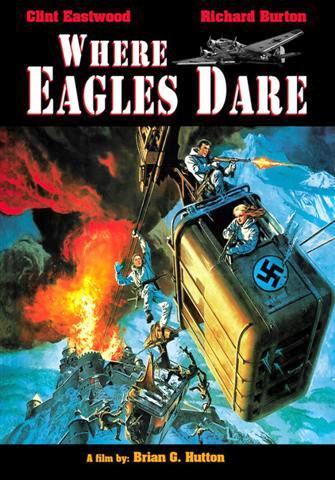
WHERE EAGLES DARE
This film as much as anything inspired me to become a paratrooper. The film opens with a swastika-emblazoned Junkers JU-52 flying through the towering Alps - "Whazzat? That's an enemy bird! Huh ? ? ?" No - those are the Good Guys . . . an early in-your-face shock to the audience.
Just the camouflage scheme on the Junkers transport aircraft itself was enough to give me a hard-on - the scene switches to inside the aircraft; the guys inside are kitted up in parachutes . . . they get up, hook up, the red light turns to green and THEY JUMP OUT - into that mountain snow-hell ! ! !
My first Special Forces Team Sergeant had a lot of flaws, but he was the consummate unconventional warfare planner; he used this film to teach us the nuances of tradecraft, using cutouts, and how an operation can be used to mask a secret mission - within the mission - as Alistair MacLean portrays in this excellent story.
Monday Mystery Babe HERE
.
Saturday, May 14, 2011
FRIDAY THE THIRTEENTH, and PANIC IN BLOGGER STREET
Y'all may or may not have noticed a serious glitch in the matrix yesterday - first I noticed was I couldn't log on to Blogger - the Google-based service that I use to do STORMBRINGER. Worse still, Wednesday's post about the last combat veteran of World War I was GONE - which disturbed me because Claude Choules and the generation he came to represent are worthy of much honor and respect. It's a rare moment you'll catch me waxing poetic, and I wondered if I'd ever be able to re-capture that haiku about the Ghost Fleet?
"The wind blows over a page in the open Book of History, and the final veteran of an ancient war passes . . .
A quiet drumbeat, a distant bugle call,
a final gun salute from the Ghost Fleet
to honor him."
When I thought about it a little later on, it occurred to me that I should have ended that haiku with the pronoun, third person plural not singular:
. . . to honor THEM."
. . . but that would be cheating and not in the spirit of haiku . . . a haiku must be like the downward sword thrust - executed once; a fleeting human thought, a moment of time, captured on paper verbatim - never edited.
WOW! I think I just wrote the world's first haiku about . . . HAIKU:
a fleeting human thought
a moment of time
captured on paper, verbatim
never edited.
Perhaps there's an English major out there who'd care to advise a lowly professional knuckle-dragging snakeater on whether it's allowable to alter that last, the Ghost Fleet number?
ANYHOW
It was time to hit the road, but before I did I checked the Twitter-verse and sure enough, Theo - my mentor in Blog-dom - was moaning about Blogger. So I added my two cents worth before climbing into the old Fahrfenugen TDI for another day of fighting Evil and keeping the world safe for Democracy.
I don't do any of the so-called 'social media' - Spacebook, My Face, FaceButt, WHATEVER - I say 'so-called' because I believe they are generally the antithesis of anything social; to the contrary they are destructive to our society, social intercourse and the art of conversation - however I do the Twitter thing because it's a useful communications tool; an abbreviated interface between the Internet, what's going on out there in the real world and the smartphone.
Twitter is a fascinating phenomenon; I posted about it during the Bangkok street battles. Twitter was instrumental during the recent uprising in Cairo, and now it seems the Taliban have infested Twitter to propagandize their cause - that's evil, of course, and I hope the people that own and operate the Twitter thingie get a handle on this - I don't normally do boycotts but this is beyond the pale; Twitter changes their act or I do.
AZIMUTH CHECK
Yesterday's break in blogdom was a refreshing refer and re-alignment of the aiming stakes. Beyond honoring those who serve, those who have served, and those who gave all; the original purpose of Blog STORMBRINGER has been to provide a little outlet for my creative juices. Somewhere along the line this thing has morphed into a life of its own, and creativity has suffered accordingly.
What's happening is the Blog is interfering with my time; family life, workout time (precious little of), the business of work itself, and more significantly my creative writing time. Bottom line is I'd rather do one or two well-written posts per week, and pick up where I left off posting on Theo's Last of the Few than cranking out half a dozen poorly drafted blurbs a week, just to make some kind of daily hit counter that quite honestly has paid less in two years than what I make in two days at my day job.
A couple of weeks back I floated the question of serializing a couple of novels I've crafted over the years, and I'm still keen on developing this.
Suggestions range from integrating my work into the blog and charging per chapter (which would be great if I could figure how to do it); self-publishing - which would be fine if my objective was simply to be published; or getting accepted onto one of the 'reader' devices - which is the way I want to go. Barnes and Noble have a reader thingie, and of course there's Kindle - either way would work for me.
ANECDOTE
I've gone on about the novel long enough - I guess it's time to share a little of what I write. My inspiration has always been the action/adventure novels of Scottish author Alistair MacLean, with perhaps a touch of Conrad thrown in for good measure.
In 2000 I spent the better part of a year mostly by myself in the Islamic Republic of Mauritania. I lived alone in a large house of cement, stone and marble, on the edge of the great Sahara. That lonely outpost was where I started the novel I am about to present.
A year rolled by. I'd been in and out of West Africa a couple of times and as fate would have it I was in Washington DC on official business; good friends David & Danielle had me over to their place for dinner. Recently Danielle reminded me of something I said over the dinner table that evening: "Something big is coming . . . we see it coming, there's all kinds of activity on the intell sources . . . I don't know what's going down, but something big is going to happen . . ."
The date of that dinner party was September 10th, 2001, and the next morning I had an appointment at the Pentagon.
The point of my anecdote is this: the novel I crafted featured the world's most wanted terrorist ol' Mister Fish Food himself. Well 9/11 changed the whole premise of THAT work of fiction, and I spent a VERY busy next couple of years chasing ghosts all over Eastern Europe and North Africa, and writing fell by the wayside.
I may or may not have to change the premise of my story; I'd hate to intersect fiction on top of what is promising to be a terrific tale of action and adventure all by itself. Most likely I'll re-write it, craft it in my own terms, and drive on with it.
Here's the teaser:
Well, there it is. If you like my work, go over to the right there and click on email STORMBRINGER - and let me know if you'd be willing to click on it for a dollar a chapter.
Cheers - S.L.
Yesterday's Bird HERE
.
"The wind blows over a page in the open Book of History, and the final veteran of an ancient war passes . . .
A quiet drumbeat, a distant bugle call,
a final gun salute from the Ghost Fleet
to honor him."
When I thought about it a little later on, it occurred to me that I should have ended that haiku with the pronoun, third person plural not singular:
. . . to honor THEM."
. . . but that would be cheating and not in the spirit of haiku . . . a haiku must be like the downward sword thrust - executed once; a fleeting human thought, a moment of time, captured on paper verbatim - never edited.
WOW! I think I just wrote the world's first haiku about . . . HAIKU:
a fleeting human thought
a moment of time
captured on paper, verbatim
never edited.
Perhaps there's an English major out there who'd care to advise a lowly professional knuckle-dragging snakeater on whether it's allowable to alter that last, the Ghost Fleet number?
ANYHOW
It was time to hit the road, but before I did I checked the Twitter-verse and sure enough, Theo - my mentor in Blog-dom - was moaning about Blogger. So I added my two cents worth before climbing into the old Fahrfenugen TDI for another day of fighting Evil and keeping the world safe for Democracy.
I don't do any of the so-called 'social media' - Spacebook, My Face, FaceButt, WHATEVER - I say 'so-called' because I believe they are generally the antithesis of anything social; to the contrary they are destructive to our society, social intercourse and the art of conversation - however I do the Twitter thing because it's a useful communications tool; an abbreviated interface between the Internet, what's going on out there in the real world and the smartphone.
Twitter is a fascinating phenomenon; I posted about it during the Bangkok street battles. Twitter was instrumental during the recent uprising in Cairo, and now it seems the Taliban have infested Twitter to propagandize their cause - that's evil, of course, and I hope the people that own and operate the Twitter thingie get a handle on this - I don't normally do boycotts but this is beyond the pale; Twitter changes their act or I do.
AZIMUTH CHECK
Yesterday's break in blogdom was a refreshing refer and re-alignment of the aiming stakes. Beyond honoring those who serve, those who have served, and those who gave all; the original purpose of Blog STORMBRINGER has been to provide a little outlet for my creative juices. Somewhere along the line this thing has morphed into a life of its own, and creativity has suffered accordingly.
What's happening is the Blog is interfering with my time; family life, workout time (precious little of), the business of work itself, and more significantly my creative writing time. Bottom line is I'd rather do one or two well-written posts per week, and pick up where I left off posting on Theo's Last of the Few than cranking out half a dozen poorly drafted blurbs a week, just to make some kind of daily hit counter that quite honestly has paid less in two years than what I make in two days at my day job.
A couple of weeks back I floated the question of serializing a couple of novels I've crafted over the years, and I'm still keen on developing this.
Suggestions range from integrating my work into the blog and charging per chapter (which would be great if I could figure how to do it); self-publishing - which would be fine if my objective was simply to be published; or getting accepted onto one of the 'reader' devices - which is the way I want to go. Barnes and Noble have a reader thingie, and of course there's Kindle - either way would work for me.
ANECDOTE
I've gone on about the novel long enough - I guess it's time to share a little of what I write. My inspiration has always been the action/adventure novels of Scottish author Alistair MacLean, with perhaps a touch of Conrad thrown in for good measure.
Alistair MacLean wrote what became possibly the best war film of all time:
Dirty Harry meets Agatha Christie.
Heart of Darkness by Joseph Conrad; inspiration for Coppola's Apocalypse Now, before its 1902 publication, it was serialized in three parts.
In 2000 I spent the better part of a year mostly by myself in the Islamic Republic of Mauritania. I lived alone in a large house of cement, stone and marble, on the edge of the great Sahara. That lonely outpost was where I started the novel I am about to present.
A year rolled by. I'd been in and out of West Africa a couple of times and as fate would have it I was in Washington DC on official business; good friends David & Danielle had me over to their place for dinner. Recently Danielle reminded me of something I said over the dinner table that evening: "Something big is coming . . . we see it coming, there's all kinds of activity on the intell sources . . . I don't know what's going down, but something big is going to happen . . ."
The date of that dinner party was September 10th, 2001, and the next morning I had an appointment at the Pentagon.
This was as close as I got to keeping my appointment that fateful September morning.
The point of my anecdote is this: the novel I crafted featured the world's most wanted terrorist ol' Mister Fish Food himself. Well 9/11 changed the whole premise of THAT work of fiction, and I spent a VERY busy next couple of years chasing ghosts all over Eastern Europe and North Africa, and writing fell by the wayside.
I may or may not have to change the premise of my story; I'd hate to intersect fiction on top of what is promising to be a terrific tale of action and adventure all by itself. Most likely I'll re-write it, craft it in my own terms, and drive on with it.
Here's the teaser:
Prologue
The map the continent of Africa resembles a skull; the fossilized skull of some primitive sub-human ancestor from deep within the dust and debris of Uldabi Gorge. If one starts at the straits of Gibraltar, where Africa comes closest to Europe, and traces a finger southerly, the western coastline of North Africa curves around to the base of the skull. On a human this is the medulla oblongata, where the spinal column joins into the most primordial part of the brain, the part of our being that governs instinct and involuntary muscle movement. On the map this is West Africa, an irregular, variegated coastline. Its solid green represents the low altitudes, dense vegetation, mosquito infested jungle, primordial scum.
Abidjan, Ivory Coast - Cote d’Ivoire - is a modern city on the edge of the West African coastline. Built on islands in an inland system of hyacinth-covered, crocodile- and hippo-infested lagoons and surrounded by emerald forest-covered hills, her modern skyline rises like a fantastic set from some science fiction epic.
The press had been harping about the “riots in the streets of Abidjan” for weeks, but the few clashes I saw out there didn’t come anywhere near what I would classify as a fully-fledged riot. More like spirited demonstrations, almost staged events for what is was worth.
There is no discernable beginning or end to the souk in Abidjan. There is no parking lot, no clearly marked entrance. The roadside stands simply increase in number as one approaches the area of the souk; merchants selling clothing, fruit, shoes, handbags, magazines, masks and African animals of carved wood or semi-precious stone, everything and anything imaginable.
Every hundred meters or so one encounters a woman standing by a large enamel or plastic basin perched on a barrel or a drum, full of antibiotics and other miscellaneous pharmaceuticals acquired from black market sources or the careful gleaning of westerner’s rubbish. Customers sift through the medications, lift up containers of pills in bubble packaging or plastic pill bottles with typed prescription labels to carefully inspect the mysterious drugs until they find something they feel will remedy whatever it is that ails them. Along a street that sells wooden artifacts one may find stall after stall selling hundreds of small statuettes featuring white men dressed as doctors, policemen, soldiers. Hopeful patients can place such statuary in their home, burn candles and offer liqueur, tobacco to the image. This is gri-gri; juu-juu or voodoo. If the pills don’t work, a gri-gri doll will.
The center of the souk is in a crumbling shell of concrete that goes up at least three stories; I never determined how far the complex goes in laterally. The roof in some places is made of the same steel-reinforced cement as the walls, mostly however the merchants stretch swathes of cloth between the walls to provide shade from the sun. The floor beneath one’s feet is sand, the interior is maze-like. A narrow set of stairs goes up the side of the building; merchants are tucked into every nook and cranny, poking out to offer their wares as one passes by.
It is hot and humid, airless within the depths of the souk. The senses are assaulted by a barrage of sights, sounds and smells. Bolts of vividly colored printed cloth, stalls featuring thousands and thousands of colored glass beads, more wooden statues and carved animals; hippos, crocodiles, warthogs, rhinos, gazelle, elephants, lions, zebras. Animals made of the printed cloth. Suitcases and shipping trunks. Hand tools, made in Taiwan. Korean mink blankets featuring Oriental geometric patterns or the old favorite, the white Siberian snow tiger, stacked to the ceiling in their vinyl packaging. West African music, the ancient ancestor of rock and the blues, blares it’s hypnotic rhythms out of cheap boom boxes and ancient transistor radios; the air reeks of spices, fruits, perfumes, the smell of dusty wood, and always, everywhere, the smell of thousands of sweating bodies.
A niche in the wall features shelf after shelf of ivory; tusks, statues, bracelets, bangles, necklaces, earrings, rings. More ivory lays beneath glass display cases. The owner is an ancient black in purple robes. He wears a fez, his eyes have a wisdom that is a thousand years old. He puts his hand on mine, draws me close. His dark skin looks almost blue against my arm. “Monsieur,” he says quietly, displays a mouthful of stained and rotting teeth. “Today is not a good day for you in the streets of Africa.”
Abidjan, Ivory Coast - Cote d’Ivoire - is a modern city on the edge of the West African coastline. Built on islands in an inland system of hyacinth-covered, crocodile- and hippo-infested lagoons and surrounded by emerald forest-covered hills, her modern skyline rises like a fantastic set from some science fiction epic.
The press had been harping about the “riots in the streets of Abidjan” for weeks, but the few clashes I saw out there didn’t come anywhere near what I would classify as a fully-fledged riot. More like spirited demonstrations, almost staged events for what is was worth.
There is no discernable beginning or end to the souk in Abidjan. There is no parking lot, no clearly marked entrance. The roadside stands simply increase in number as one approaches the area of the souk; merchants selling clothing, fruit, shoes, handbags, magazines, masks and African animals of carved wood or semi-precious stone, everything and anything imaginable.
Every hundred meters or so one encounters a woman standing by a large enamel or plastic basin perched on a barrel or a drum, full of antibiotics and other miscellaneous pharmaceuticals acquired from black market sources or the careful gleaning of westerner’s rubbish. Customers sift through the medications, lift up containers of pills in bubble packaging or plastic pill bottles with typed prescription labels to carefully inspect the mysterious drugs until they find something they feel will remedy whatever it is that ails them. Along a street that sells wooden artifacts one may find stall after stall selling hundreds of small statuettes featuring white men dressed as doctors, policemen, soldiers. Hopeful patients can place such statuary in their home, burn candles and offer liqueur, tobacco to the image. This is gri-gri; juu-juu or voodoo. If the pills don’t work, a gri-gri doll will.
The center of the souk is in a crumbling shell of concrete that goes up at least three stories; I never determined how far the complex goes in laterally. The roof in some places is made of the same steel-reinforced cement as the walls, mostly however the merchants stretch swathes of cloth between the walls to provide shade from the sun. The floor beneath one’s feet is sand, the interior is maze-like. A narrow set of stairs goes up the side of the building; merchants are tucked into every nook and cranny, poking out to offer their wares as one passes by.
It is hot and humid, airless within the depths of the souk. The senses are assaulted by a barrage of sights, sounds and smells. Bolts of vividly colored printed cloth, stalls featuring thousands and thousands of colored glass beads, more wooden statues and carved animals; hippos, crocodiles, warthogs, rhinos, gazelle, elephants, lions, zebras. Animals made of the printed cloth. Suitcases and shipping trunks. Hand tools, made in Taiwan. Korean mink blankets featuring Oriental geometric patterns or the old favorite, the white Siberian snow tiger, stacked to the ceiling in their vinyl packaging. West African music, the ancient ancestor of rock and the blues, blares it’s hypnotic rhythms out of cheap boom boxes and ancient transistor radios; the air reeks of spices, fruits, perfumes, the smell of dusty wood, and always, everywhere, the smell of thousands of sweating bodies.
A niche in the wall features shelf after shelf of ivory; tusks, statues, bracelets, bangles, necklaces, earrings, rings. More ivory lays beneath glass display cases. The owner is an ancient black in purple robes. He wears a fez, his eyes have a wisdom that is a thousand years old. He puts his hand on mine, draws me close. His dark skin looks almost blue against my arm. “Monsieur,” he says quietly, displays a mouthful of stained and rotting teeth. “Today is not a good day for you in the streets of Africa.”
© 2011 by Sean Linnane
Well, there it is. If you like my work, go over to the right there and click on email STORMBRINGER - and let me know if you'd be willing to click on it for a dollar a chapter.
Cheers - S.L.
Yesterday's Bird HERE
.
Thursday, May 12, 2011
LAST OF THE LAST
Last World War I Combat Veteran Dies in Australia
Claude Stanley Choules - Last Combat Veteran of World War I
March 3, 1901 - May 5, 2011
Claude Stanley Choules, a man of contradictions, humble spirit and wry humor, died in a Western Australia nursing home on Thursday at the age of 110. And though his accomplishments were many - including a 41-year military career that spanned the two World Wars - the man known as "Chuckles" to his comrades in the Australian Navy was happiest being known as a dedicated family man.
Choules was born March 3, 1901, in the small British town of Pershore, Worcestershire, one of seven children. As a child, he was told his mother had died - a lie meant to cover a more painful truth: She left when he was 5 to pursue an acting career. The abandonment affected him profoundly, said his other daughter, Anne Pow, and he grew up determined to create a happy home for his own children.
Claude Stanley Choules lied about his age so he could join the British Royal Navy in 1916.
World War I was raging when Choules began training with the British Royal Navy, just one month after he turned 14. In 1917, he joined the battleship HMS Revenge, from which he watched the 1918 surrender of the German High Seas Fleet, the main battle fleet of the German Navy during the war.
"There was no sign of fight left in the Germans as they came out of the mist at about 10 a.m.," Choules wrote in his autobiography. The German flag, he recalled, was hauled down at sunset.
"So ended the most momentous day in the annals of naval warfare," he wrote. "A fleet of ships surrendered without firing a shot."
Choules later joined the Royal Australian Navy during the Second World War.
During World War II Choules was the acting torpedo officer in Fremantle, Western Australia, and chief demolition officer for the western side of the Australian continent. Choules disposed of the first mine to wash ashore in Australia during the war.
He later transferred to the Naval Dockyard Police and remained in the service until his retirement in 1956.
"His career has spanned some of the most significant events in maritime history," Royal Australian Navy Captain Brett Wolski said in a statement Thursday.
Choules later in life became a pacifist who was uncomfortable with anything that glorified war. He disagreed with the celebration of Anzac Day, Australia's most important war memorial holiday, and refused to march in parades held each year to mark the holiday.
"He didn't believe in war," his 84-year-old daughter Daphne Edinger said.
My maternal grandfather - from whom I have derived my nom de guerre - served in the British Royal Navy during World War I. Perhaps one day I will share with you his adventures here in these pages, but today is for Claude Choules - the Last of the Last:
"The wind blows over a page in the open Book of History, and the final veteran of an ancient war passes . . .
A quiet drumbeat, a distant bugle call,
a final gun salute from the Ghost Fleet
to honor him."
From now and forever more we will look back at what has finally become a truly bygone Era.
- Sean Linnane, 5-11-2011
Today's Bird HERE
.
Claude Stanley Choules - Last Combat Veteran of World War I
March 3, 1901 - May 5, 2011
Claude Stanley Choules, a man of contradictions, humble spirit and wry humor, died in a Western Australia nursing home on Thursday at the age of 110. And though his accomplishments were many - including a 41-year military career that spanned the two World Wars - the man known as "Chuckles" to his comrades in the Australian Navy was happiest being known as a dedicated family man.
Choules was born March 3, 1901, in the small British town of Pershore, Worcestershire, one of seven children. As a child, he was told his mother had died - a lie meant to cover a more painful truth: She left when he was 5 to pursue an acting career. The abandonment affected him profoundly, said his other daughter, Anne Pow, and he grew up determined to create a happy home for his own children.
Claude Stanley Choules lied about his age so he could join the British Royal Navy in 1916.
World War I was raging when Choules began training with the British Royal Navy, just one month after he turned 14. In 1917, he joined the battleship HMS Revenge, from which he watched the 1918 surrender of the German High Seas Fleet, the main battle fleet of the German Navy during the war.
"There was no sign of fight left in the Germans as they came out of the mist at about 10 a.m.," Choules wrote in his autobiography. The German flag, he recalled, was hauled down at sunset.
"So ended the most momentous day in the annals of naval warfare," he wrote. "A fleet of ships surrendered without firing a shot."
Choules later joined the Royal Australian Navy during the Second World War.
During World War II Choules was the acting torpedo officer in Fremantle, Western Australia, and chief demolition officer for the western side of the Australian continent. Choules disposed of the first mine to wash ashore in Australia during the war.
He later transferred to the Naval Dockyard Police and remained in the service until his retirement in 1956.
"His career has spanned some of the most significant events in maritime history," Royal Australian Navy Captain Brett Wolski said in a statement Thursday.
Choules later in life became a pacifist who was uncomfortable with anything that glorified war. He disagreed with the celebration of Anzac Day, Australia's most important war memorial holiday, and refused to march in parades held each year to mark the holiday.
"He didn't believe in war," his 84-year-old daughter Daphne Edinger said.
My maternal grandfather - from whom I have derived my nom de guerre - served in the British Royal Navy during World War I. Perhaps one day I will share with you his adventures here in these pages, but today is for Claude Choules - the Last of the Last:
"The wind blows over a page in the open Book of History, and the final veteran of an ancient war passes . . .
A quiet drumbeat, a distant bugle call,
a final gun salute from the Ghost Fleet
to honor him."
From now and forever more we will look back at what has finally become a truly bygone Era.
- Sean Linnane, 5-11-2011
Today's Bird HERE
.
Subscribe to:
Posts (Atom)